By TKG Real Estate
There is something deeply rewarding about owning a historic home in the Hudson Valley. Whether you have a Federal-style farmhouse, a charming Victorian, or a Dutch Colonial near the banks of the Hudson River, these properties carry an architectural richness that newer construction simply cannot replicate. The wide-plank floors, thick plaster walls, hand-hewn beams, and original millwork are the very features that drew you to the property in the first place. The challenge, and the opportunity, lies in decorating in a way that honors that history without turning your home into a museum.
The Hudson Valley's historic homes span centuries of American architectural history. Each style has its own logic, its own palette, and its own decorating possibilities. Understanding the period your home comes from is the single most useful thing you can do before making any design decisions. It gives you a foundation to work from and a visual language to build on, whether you choose to stay true to the period or play off it deliberately.
Key Takeaways
- Working with your home's original architectural details rather than against them produces the most cohesive and rewarding results.
- Period-appropriate paint colors can dramatically transform a historic interior without requiring any structural changes.
- Mixing antique furniture with contemporary pieces creates rooms that feel lived-in rather than staged or frozen in time.
- Textiles, lighting, and window treatments do more heavy lifting in historic interiors than most homeowners expect.
- Understanding your home's specific period and regional style gives you a reliable framework for making confident design decisions.
Start With the Architecture
Before you buy a single piece of furniture or select a single paint chip, spend real time studying your home's architecture. Walk through every room and make note of what is original: the moldings, the hardware, the flooring, the fireplace surrounds, the windows, and the ceiling heights. These elements are not just decorative; they are the load-bearing bones of your interior design. Everything you bring into the space will either reinforce or undermine what is already there.
In a Dutch Colonial or Federal-style home, you are typically working with more restrained ornament: simple cornices, six-over-six windows, and wide-board floors with visible saw marks. The architecture calls for a quieter, more disciplined approach to furnishing and decoration.
In a Gothic Revival or Queen Anne Victorian, you are working with considerably more visual complexity: decorative brackets, turned spindles, patterned shingles, and rooms that practically demand layered textiles and saturated color. Learning to read your home's architectural vocabulary is the prerequisite to decorating it well.
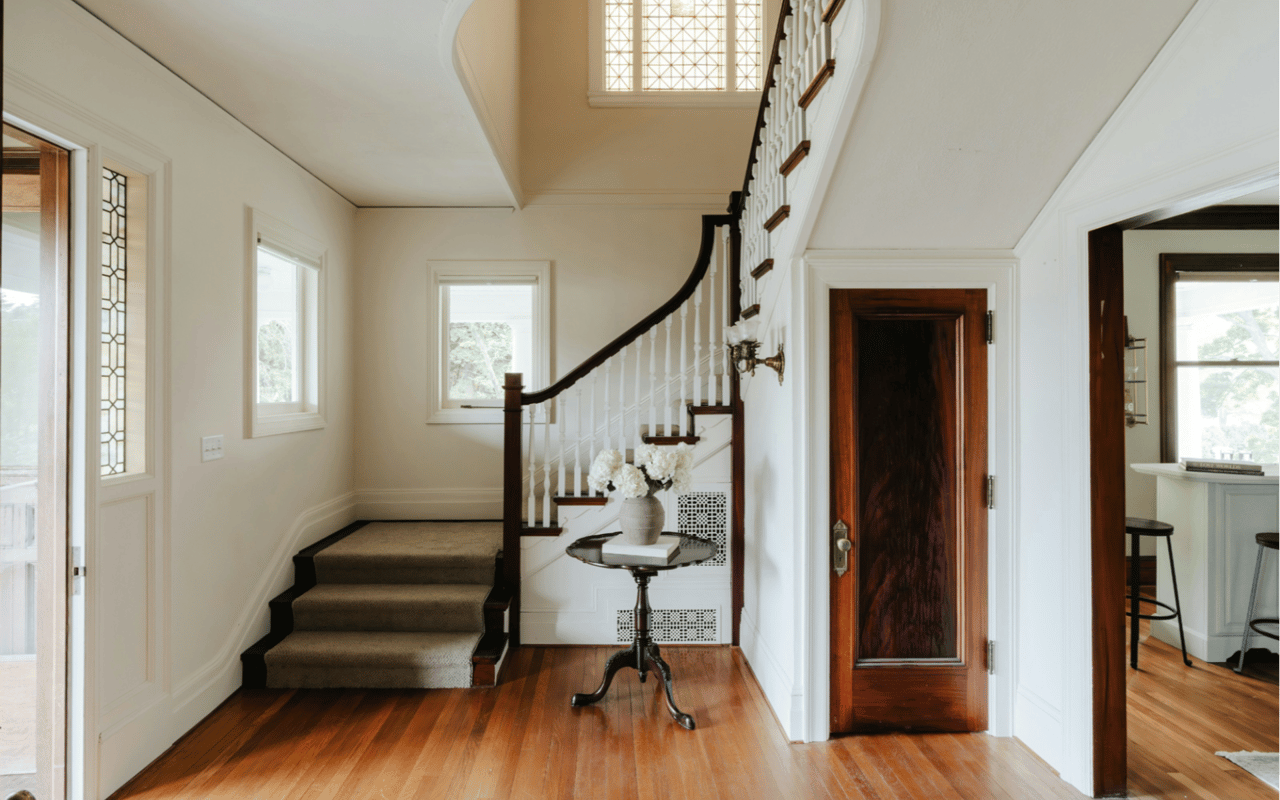
Pay particular attention to your home's millwork. Many Hudson Valley homes still have original door casings, baseboards, chair rails, and built-ins that are far more refined than anything you could easily replicate today. If any of this millwork has been painted over multiple times, it may be worth having it stripped and repainted properly. Crisp, well-maintained woodwork elevates an entire room in ways that are hard to achieve through furnishings alone.
Details Worth Protecting and Highlighting
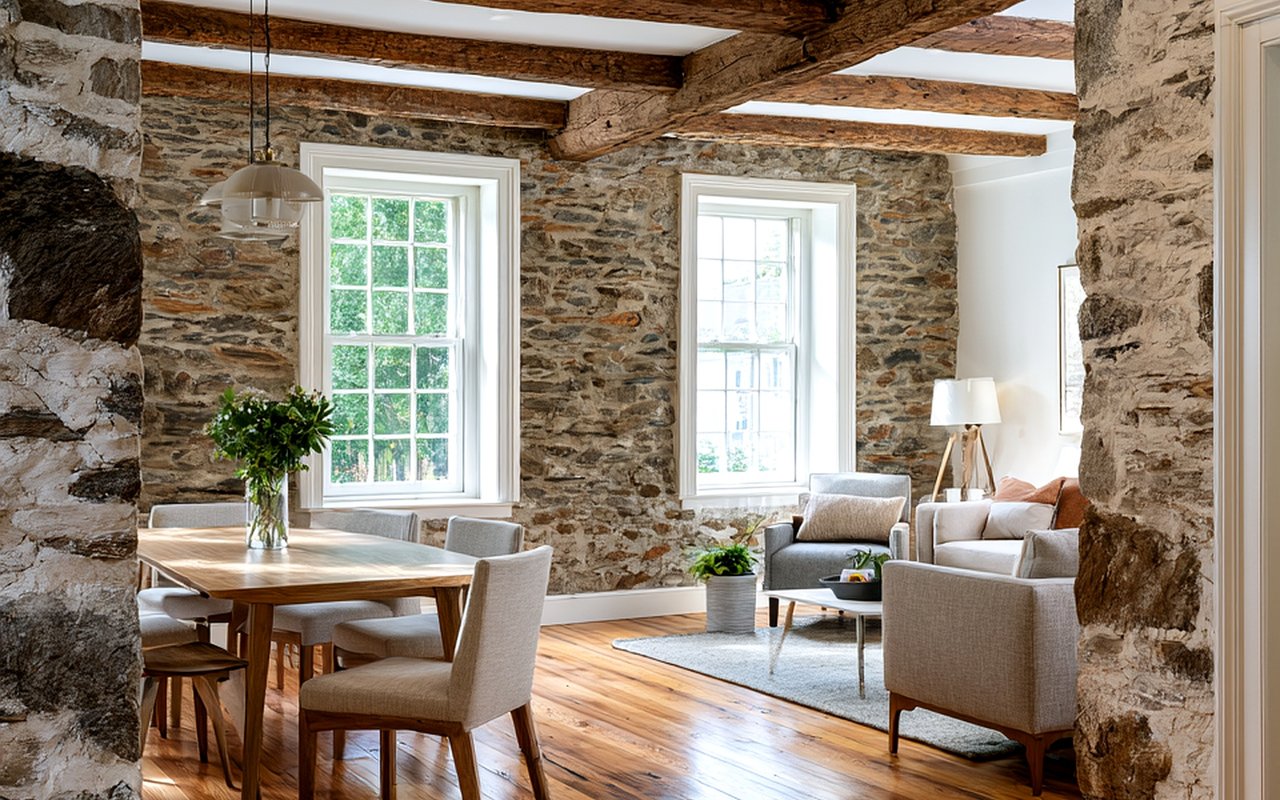
- Original wide-plank floors, which are irreplaceable and should be refinished rather than covered whenever possible.
- Plaster walls with hand-applied texture, giving rooms a warmth and depth that drywall cannot match.
- Fireplace surrounds with original tile or carved wood that anchor the room visually.
- Exposed ceiling beams in older farmhouses that add structural interest and a sense of age.
- Period hardware on doors and windows, which can often be restored rather than replaced.
Choosing Paint Colors That Honor the Time Period
Color is one of the fastest and most affordable ways to transform a historic interior, and it is also one of the easiest ways to get it wrong. The instinct in many older homes is to go safe with white or off-white throughout, which tends to flatten the very architectural details you are trying to show off.
Historic interiors generally responded well to more complex colors: ochres, slate blues, deep greens, warm umbers, and the full range of muted, mineral-based tones that were achievable with natural pigments.
Several paint companies have developed historically researched palettes specifically for period homes. These ranges are not limited to muted tones; many include rich jewel colors that feel completely authentic in Victorian interiors, and the underlying complexity of the pigments tends to behave beautifully in rooms with natural light, changing character through the day in ways that flat modern colors do not.
A useful approach is to think about color in terms of the three surfaces in any room: walls, trim, and ceiling. In many historic homes, the trim was painted a slightly different shade of the same color family as the walls or in a contrasting warm neutral, rather than the stark white trim that became standard in the twentieth century. Painting trim in an antique white, warm ivory, or even a deeper tonal relative of the wall color immediately reads as more authentic and gives rooms a sense of depth that high-contrast white trim can undermine.
Period Color Palettes by Style
- Federal and Greek Revival homes typically used restrained palettes of stone gray, warm cream, soft sage, and Prussian blue.
- Dutch Colonial and early farmhouse interiors often featured earth tones: burnt sienna, raw umber, and muted barn red.
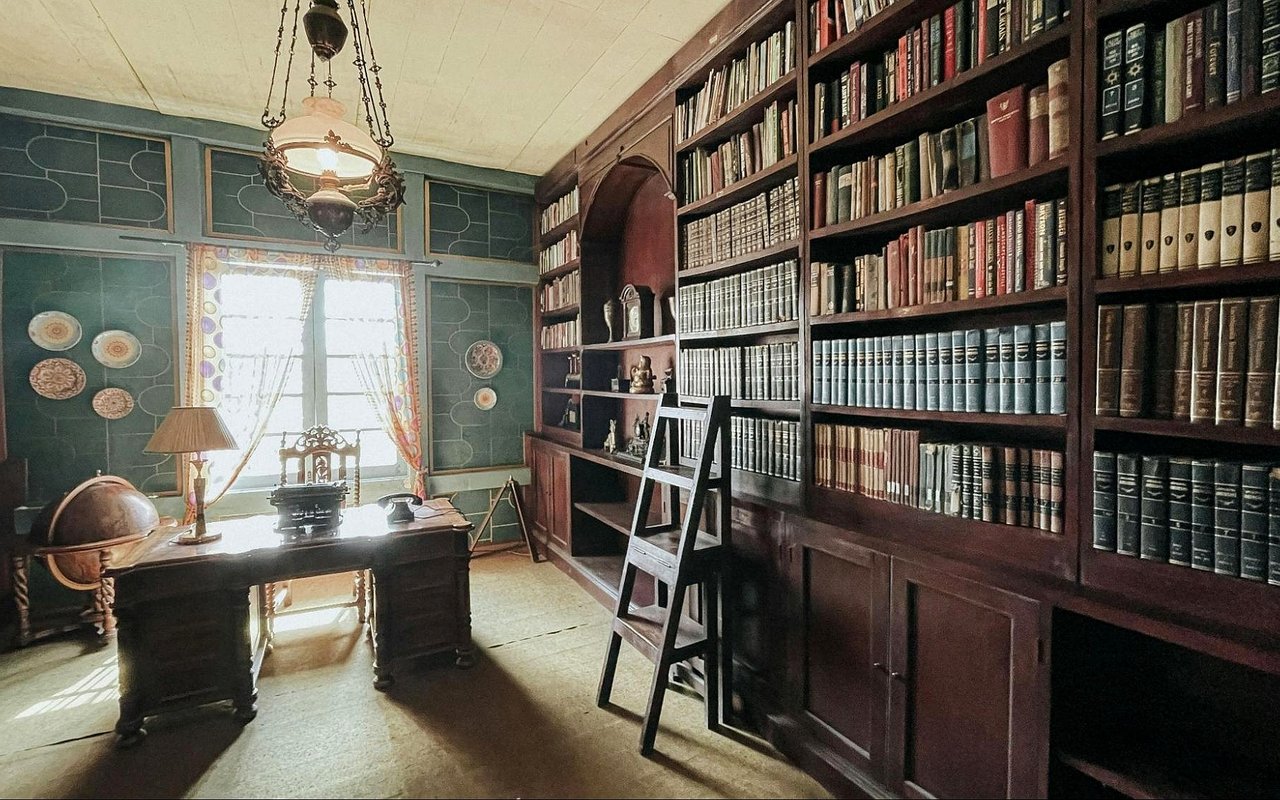
- Victorian-era homes can handle much richer colors; deep teal, bottle green, burgundy, and tobacco brown are all historically grounded choices.
- Arts and Crafts interiors called for muted organic tones inspired by nature: mossy greens, clay, dusty rose, and warm brown.
- Mid-century additions to historic homes can be a bridge moment, using warmer, more saturated versions of the midcentury palette to connect old and new.
Furnishing With Intention
One of the most common mistakes in historic home decorating is the impulse to furnish entirely in period pieces. Rooms decorated this way often feel more like house museums than homes, and they can be exhausting to live in.
A more successful approach is to anchor each room with one or two significant antique or vintage pieces and build around them with a mix of contemporary furnishings that share the same underlying sensibility: honest materials, clean proportions, and quality construction.
In a Hudson Valley farmhouse, this might mean a nineteenth-century farm table in the kitchen surrounded by contemporary Windsor-style chairs in a natural wood finish or a Georgian secretary desk against a wall, otherwise furnished in understated contemporary pieces.
The antique carries the room's historical identity, while the contemporary pieces let it breathe and function for modern life. The key is proportion and material. Avoid anything that looks synthetic or overtly industrial in a period context, and favor natural materials like linen, wool, solid wood, and aged leather.
Rugs do particularly meaningful work in historic interiors. In rooms with strong architectural character, a quiet, tone-on-tone rug often works better than something bold, letting the architecture remain the focal point.
Furniture Styles That Work Well
- American Federal and Shaker pieces for early farmhouses and Colonial-style homes.
- Windsor chairs in natural or painted finishes, which work across almost every American period style.
- Victorian balloon-back chairs, tufted settees, and carved side tables for ornate nineteenth-century interiors.
- Arts and Crafts furniture with mortise-and-tenon joinery and hand-hammered hardware for Craftsman-style homes.
- Scandinavian mid-century pieces in natural wood, which sit surprisingly well against historic American architecture without competing with it.
Lighting, Textiles, and Window Treatments
Lighting is where many historic home renovations fall short. The temptation to install recessed can lighting throughout is understandable from a practical standpoint, but it tends to flatten and harden rooms that were designed around candlelight, oil lamps, and gas fixtures.
Whenever possible, lean into period-appropriate fixtures: restored gas-style chandeliers, wall sconces with fabric shades, lanterns, and table lamps with hand-thrown ceramic or aged brass bases. Dimmers are your best friend in a historic interior.
Textiles give historic rooms softness and warmth that hard surfaces alone cannot provide. In a drafty Victorian or stone farmhouse, heavily lined curtains in wool, velvet, or heavy linen also serve a practical insulating function. Look for patterns with historical grounding: toile, damask, wide stripes, small geometrics, and botanical prints all have long design histories that read naturally in period contexts. Solid linens and natural cottons work equally well and have the advantage of letting patterned wallpaper or painted plaster do the visual work without competition.
Window treatments in historic homes deserve special consideration. Many older windows have beautiful proportions that modern blinds and shades interrupt. Simple floor-length curtains hung from iron or brass rods, shutters restored to working condition, or Roman shades in a solid natural fabric are all approaches that complement historic architecture without fighting it.
Textile and Lighting Choices That Suit Historic Interiors
- Beeswax or hand-dipped taper candles in candlesticks on the dining table for warmth during evening meals.
- Pendant lanterns in aged brass or oil-rubbed bronze that reference period gas fixtures without being costumey.
- Wool or wool-blend throw blankets in natural undyed tones, draped over sofas and chairs for warmth and texture.
- Linen curtains in an unbleached natural tone that diffuse light softly without blocking the views.
- Hand-blocked or printed cotton in a period pattern for accent pillows or upholstered seat cushions.
FAQs
How Do I Modernize a Historic Home Without Losing Its Character?
The most successful modernizations in historic homes happen in the rooms where character is least concentrated: kitchens, bathrooms, and utility spaces. Bringing these rooms up to contemporary standards of comfort and functionality does not have to come at the expense of the home's overall atmosphere.
Choosing fixtures and finishes that reference historical proportions and materials, such as farmhouse sinks, unlacquered brass hardware, subway tile, and natural stone countertops, keeps the modern work in conversation with the rest of the house.
What Paint Finish Should I Use on Historic Plaster Walls?
Historic plaster walls generally look best with a flat or matte finish, which allows the natural texture of the plaster to read rather than reflecting light off imperfections. Modern flat paints are also more forgiving of the slight irregularities that are intrinsic to hand-applied plaster. In kitchens and bathrooms where moisture is a concern, an eggshell finish is a reasonable compromise; just avoid anything shinier on walls in period rooms, as the reflectivity can make the space feel more clinical than historic.
Should I Repair Original Floors or Replace Them?
Original wide-plank floors should almost always be repaired and refinished rather than replaced. The wood in a nineteenth-century floor is typically old-growth timber that is denser, harder, and more dimensionally stable than anything available new today. A professional floor restorer can address gaps, replace damaged boards with period-appropriate salvaged lumber, and refinish to a low-sheen that reads as authentic.
Make Your Historic Home Truly Yours
The most stunning historic interiors in the Hudson Valley are not the ones that have been painstakingly frozen in time; they are the ones that offer a distinct taste and a genuine appreciation for timeless elements. They mix centuries without apology, prioritize quality and longevity over trend, and treat the original architecture as a collaborator rather than a constraint.
If you are hoping to buy a beautiful historic property in the Hudson Valley, reach out to our team at TKG Real Estate for expert guidance.